Open a bank account or get a credit card without signed permission from her father or hr husband.
Serve on a jury – because it might inconvenience the family not to have the woman at home being her husband’s helpmate.
Obtain any form of birth control without her husband’s permission. You had to be married, and your hub and had to agree to postpone having children.
Get an Ivy League education.
Ivy League schools were men’s colleges ntil the 70′s and 80′s. When
they opened their doors to women it was agree that women went there for
their MRS. Degee.
Experience equality in the workplace: Kennedy’s
Commission on the Status of Women produced a report in 1963 that
revealed, among other things, that women earned 59 cents for every
dollar that men earned and were kept out of the more lucrative
professional positions.
Keep her job if she was pregnant.Until the Pregnancy Discrimination Act in 1978, women were regularly fired from their workplace for being pregnant.
Refuse to have sex with her husband.The mid 70s saw most states recognize marital rape and in 1993 it became criminalized
in all 50 states. Nevertheless, marital rape is still often treated
differently to other forms of rape in some states even today.
Get a divorce with some degree of ease.Before the No Fault Divorce
law in 1969, spouses had to show the faults of the other party, such as
adultery, and could easily be overturned by recrimination.
Have a legal abortion in most states.The Roe v. Wade case in 1973 protected a woman’s right to abortion until viability.
Take legal action against workplace sexual harassment.
Play college sports
Title IX of the Education
Amendments of protects people from discrimination based
on sex in education programs or activities that receive Federal
financial assistance
It was nt until this statute that colleges had teams for women’s sports
Apply for men’s Jobs
The EEOC rules that
sex-segregated help wanted ads in newspapers are illegal. This ruling
is upheld in 1973 by the Supreme Court, opening the way for women to
apply for higher-paying jobs hitherto open only to men.
This is why we needed feminism – this is why we know that feminism works
I just want to reiterate this stuff, because I legit get the feeling there are a lot of younger women for whom it hasn’t really sunk in what it is today’s GOP is actively trying to return to.
Did you go to a good college? Shame on you, you took a college placement that could have gone to a man who deserves and needs it to support or prepare for his wife & children. But if you really must attend college, well, some men like that, you can still get married if you focus on finding the right man.
Got a job? Why? A man could be doing that job. You should be at home caring for a family. You shouldn’t be taking that job away from a man who needs it (see college, above). You definitely don’t have a career – you’ll be pregnant and raising children soon, so no need to worry about promoting you.
This shit was within living memory.
I’M A MILLENIAL and my mother was in the second class that allowed women at an Ivy League school.
Men who are alive today either personally remember shit like this or have parents/family who have raised them into thinking this was the way America functioned back in the blissful Good Old Days. There are literally dudes in the GOP old enough to remember when it was like this and yearn for those days to return.
When people talk about resisting conservativism and the GOP, we’re not just talking about whether the wage gap is a myth or not. We’re talking about whether women even have the fundamental right to exist as individuals, to run their own households and compete for jobs and be considered on an equal footing with men in any arena at all in the first place.
I was a child in the 1960s, a teenager in the 1970s, a young adult in the 1980s. This is what it was like:
When I was growing up, it was considered unfortunate if a girl was good at sports. Girls were not allowed in Little League. Girls’ teams didn’t exist in high school, except at all-girls’ high schools. Boys played sports, and girls were the cheerleaders.
People used to ask me as a child what I wanted to be when I grew up. I said I wanted to be a brain surgeon or the first woman justice on the Supreme Court. Everyone told me it was impossible–those just weren’t realistic goals for a girl–the latter, especially, because you couldn’t trust women to judge fairly and rationally, after all.
In the 1960s and 1970s, all women were identified by their marital status, even in arrest reports and obituaries. In elementary school, my science teacher referred to Pierre Curie as DOCTOR Curie and Marie Curie as MRS. Curie…because, as he put it, “she was just his wife.” (Both had doctorates and both were Nobel prize winners, so you would think that both would be accorded respect.)
Companies could and did require women to wear dresses and skirts. Failure to do could and did get women fired. And it was legal. It was also legal to fire women for getting married or getting pregnant. The rationale was that a woman who was married or who had a child had no business working; that was what her husband was for. Aetna Insurance, the biggest insurance company in America, fired women for all of the above.
A man could rape his wife. Legally. I can remember being twelve years old and reading about legal experts actually debating whether or not a man could actually be said to coerce his wife into having sex. This was a serious debate in 1974.
The debate about marital rape came up in my law school, too, in 1984. Could a woman be raped by her husband? The guys all said no–a woman got married, so she was consenting to sex at all times. So I turned it around. I asked them if, since a man had gotten married, that meant that his wife could shove a dildo or a stick or something up his ass any time she wanted to for HER sexual pleasure.
(Hey, I thought it was reasonable. If one gender was legally entitled to force sex on the other, then obviously the reverse should also be true.)
The male law students didn’t like the idea. Interestingly, they commented that being treated like that would make them feel like a woman.
My reaction was, “Thank you for proving my point…”
The concept of date rape, when first proposed, was considered laughable. If a woman went out on a date, the argument of legal experts ran, sexual consent was implied. Even more sickening was the fact that in some states–even in the early 1980s–a man could rape his daughter…and it was no worse than a misdemeanor.
Women taking self-defense classes in the 1970s and 1980s were frequently described in books and on TV as “cute.” The implication was that it was absurd for a woman to attempt to defend herself, but wasn’t it just adorable for her to try?
I was expressly forbidden to take computer classes in junior and senior years of high school–1978-79 and 1979-80–because, as the principal told me, “Only boys have to know that kind of thing. You girls are going to get married, and you won’t use it.”
When I was in college–from 1980 to 1984–there were no womens’ studies. The idea hadn’t occurred in many places because the presumption was that there was nothing TO study. My history professor–a man who had a doctorate in history–informed me quite seriously that women had never produced a noted painter, sculptor, composer, architect or scientist because…wait for it…womens’ brains were too small.
(He was very surprised when I came up with a list of fifty women gifted in the arts and science, most of whom he had never heard of before.)
When Walter Mondale picked Geraldine Ferraro as a running mate in 1984, the press hailed it as a disaster. What would happen, they asked fearfully, if Mondale died and Ferraro became president? What if an international crisis arose and she was menstruating? She could push the nuclear button in a fit of PMS! It would be the end of the WORLD!!
…No, they WEREN’T kidding.
On the surface, things are very different now than they were when I was a child, a teen and a young adult. But I’m afraid that people now do not realize what it was like then. I’ve read a lot of posts from young women who say that they are not feminists. If the only exposure to feminism they have is the work of extremists, I cannot blame them overmuch.
I wish that I could tell them what feminism was like when it was new–when the dream of legal equality was just a dream, and hadn’t even begun to come true. When “woman’s work” was a sneer–and an overt putdown. When people tut-tutted over bright and athletic girls with the words, “Really, it’s a shame she’s not a boy.” That lack of feminism wasn’t all men opening doors and picking up checks. A lot of it was an attitude of patronizing contempt that hasn’t entirely died out, but which has become less publicly acceptable.
I wish I could make them feel what it was like…when grown men were called “men” and grown women were “girls.”
Know your history.
So this, too, is what they mean saying “make America great again” and/or the good old days.
REBLOG FOREVER.
I attended an all-girls PUBLIC high school in Jefferson Parish, LA (when the school desegregated by race in the 1960s, the high schools segregated by gender) from 1974-1978. We had to FIGHT for physics and calculus classes. Our parents had to go to the fucking school board and demand we have the same classes the boys’ schools had. THAT is why I’m a feminist.
When she was 10, a white boy pushed Auntie Rosa,
and she pushed him back. Auntie Rosa’s grandmother told her, “You need
to be quiet, you need to stop being so vocal.” She was told, as black
people, we’re not allowed to do those things to whites. Her grandmother
was concerned that she’d get hurt, that she could even get lynched. But
Auntie Rosa told her grandmother, “Let them try to lynch me.” She was
that bold, even when she was young.
Sometimes I
struggle with social media because it seems there’s always somebody
belittling Auntie Rosa. I recently saw someone post that my aunt wasn’t
really black. Or people say that she was strategically placed on the bus
in Montgomery because she was lighter skinned. It’s amazing to me that
they would think that. Yes our family ancestry is part African American,
part white, and part Native American. Auntie Rosa considered herself
black and was treated as black. We have a lot of work to do in this
country regarding colorism, but whether you’re light or dark — and this
is still true today — you are black in America and you’re going to be
treated accordingly.
People also think that her not giving up her seat
was all a planned, staged thing for the media. Maybe you’ve seen that
famous picture of my aunt getting arrested and the man fingerprinting
her — well, that’s not even from December 1, 1955. It’s from the second
time she was arrested. (Yes, she got arrested more than once.) By the
time that photograph was taken, word had gotten out across the country
that Montgomery had started a bus boycott. So that’s when the media
showed up to take a picture.
My aunt wasn’t even paying attention that day she
got on the bus. She had been avoiding that driver’s bus for 12 years. He
would stop at her stop and she wouldn’t get on. That particular day she
wasn’t paying attention because she was thinking of Emmett Till, who
had been murdered that summer. She already paid her money when she
realized it was that driver, but then she figured she’d go ahead and sit
down. She didn’t stand up when the driver demanded that she stand up
because she kept thinking of him being killed. She was that angry. Keep
in mind, it was legal for bus drivers back then to carry handguns — my
aunt could have been shot and killed on that bus.
Once
word of mouth spread about what happened to my aunt, it helped people
have a little bit more courage than before. You have to understand, my
aunt was a known person in the community. She became the recording
secretary for the NAACP almost 15 years before she refused to give up
her seat on that bus. Everyone knew her based off of her writing down
stories like Recy Taylor’s: Oh, she was the lady who held my hand
when my uncle got beat up. She got my kid involved in a youth program to
read books. She was the one who came and tried to get me to register to
vote. They were shocked that something could happen to nice Mrs.
Parks. Before then, many black people were like, “Oh well, that person
should have not got arrested. They should have just gotten off the bus. ”
She
wrote in one of her journals about her feelings of hurt after she got
arrested. She worked in the department store where she was a seamstress
for the next five weeks after that and then they let her go. During that
time, her black coworkers didn’t speak to her — that whole five weeks.
She would say good morning and they wouldn’t say anything. It was very
disheartening. They looked at her like she was stirring up trouble for
them. My aunt explained to me that it was because Jim Crow was telling
them, “This is the best life you’re going to have, and you can get
killed if you resist.”
People also don’t know that my aunt went through a
lot of financial hardships after what happened. She had health issues
and developed ulcers and couldn’t afford the medication. She didn’t get
real, stable work until 1957 when her brother, my Grandfather McCauley,
convinced her to move to Detroit. She sacrificed her privacy, her job,
her marriage, her health. She never talked about that with people,
though. She just didn’t want to burden people or make them feel sorry
for her.
It still breaks my heart to remember my aunt
telling me how many times it took for her to get registered to vote.
Back then, they made black folks take a literacy test knowing that many
couldn’t read or write. It was a trickle down effect of the lack of
education for black people. But Auntie Rosa, she knew all the answers
backwards and forwards, but year after year they denied her. And
finally it was a white woman in the office who said, just let her
register to vote. My aunt had been persistent, showing up. “I’m here to
take the test so I can get registered to vote.” And then I think about
how, as soon as I turned 18, all I had to do is go sign a card.
Yes,
I’m glad that Oprah spoke up about Recy Taylor and about my aunt. I
know people might still try to belittle my Auntie Rosa by saying, “Oh
she was just a little seamstress.” But that “little seamstress” is proof
you can be anything out here and still make changes in your community.
My aunt felt passionate about civil rights — it was a passion she felt
in her soul, and we all have to tap into that. Whether it’s working with
children or with the elderly, or voting rights or women’s rights —
working at a homeless shelter or women’s shelter or getting trained to
volunteer on a suicide hotline on the weekends. We can all do a little
thing and the ripple effect of it can go a long way.
ill put up the text in a minute but: this shirts good
the text is from “queers read this” a leaflet anonymously published and distributed nyc, june 1990. the excerpt reads:
AN ARMY OF LOVERS CANNOT LOSE Being queer is not about a right to privacy; it is about the freedom to be public, to just be who we are. It means everyday fighting oppression; homophobia, racism, misogyny, the bigotry of religious hypocrites and our own self-hatred. (We have been carefully taught to hate ourselves.) And now of course it means fighting a virus as well, and all those homo-haters who are using AIDS to wipe us off the face of the earth.
Being queer means leading a different sort of life. It’s not about the mainstream, profit-margins, patriotism, patriarchy or being assimilated. It’s not about executive directors, privilege and elitism. It’s about being on the margins, defining ourselves; it’s about gender fuck and secrets, what’s beneath the belt and deep inside the heart; it’s about the night. Being queer is “grass roots” because we know that everyone of us, every body, every cunt, every heart and ass and dick is a world of pleasure waiting to be explored. Everyone of us is a world of infinite possibility.
We are an army because we have to be. We are an army because we are so powerful. (We have so much to fight for; we are the most precious of endangered species.) And we are an army of lovers because it is we who know what love is. Desire and lust, too. We invented them. We come out of the closet, face the rejection of society, face firing squads, just to love each other! Every time we fuck, we win.
We must fight for ourselves (no one else is going to do it) and if in that process we bring greater freedom to the world at large then great. (We’ve given so much to that world: democracy, all the arts, the concepts of love, philosophy and the soul, to name just a few gifts from our ancient Greek Dykes, Fags.)
Let’s make every space a Lesbian and Gay space. Every street a part of our sexual geography. A city of yearning and then total satisfaction. A city and a country where we can be safe and free and more. We must look at our lives and see what’s best in them, see what is queer and what is straight and let that straight chaff fall away! Remember there is so, so little time. And I want to be a lover of each and every one of you. Next year, we march naked.
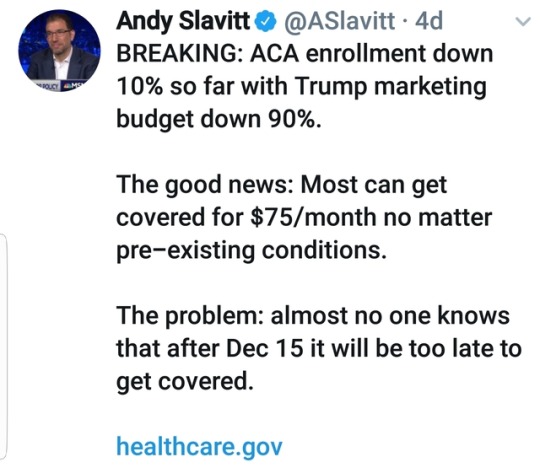
For the record? As a self-employed small business owner with a preexisting condition, my pre-ACA health insurace suuuuuuuuucked. My current plan actually provides substantially better coverage than the old one and costs half as much. I only wish I’d done it sooner– getting on the exchange was, tbh, entirely a spite-motivated action on my part, and probably the sole positive impact of 45′s presidency on my life.
Please boost. ACA/Obamacare sign-up for next year ends December 15.
before I desided to draw smth with naruto I was drawing a little series with drarry and porn hands, there’re my fav pics from it, maybe I’ll finish it lateeeer




 iamjohnlocked4life